September 24, 2026
The History of Cincinnati-Style Chili


Class Description
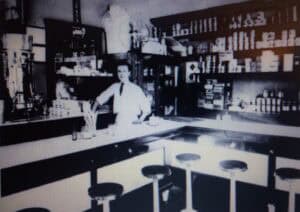
Cincinnati Style Chili is a look at 10 or so chili-parlors from the original store-front, through spreading popularity of the food, right up to the present day.
Who were some of these pioneers? Where did they come from? How did they succeed and what makes them different? What made this special style of chili different from what was called chili before its invention? Was it quality of ingredients, special spices, or just Mediterranean pizzazz?
What is a two-way, three-way, four-way, and five-way? Have you heard of a six-way and even a seven-way? Whether you like Gold-Star, Skyline, Camp Washington….or any of the other chili parlors in Cincinnati, there’s a lot to learn!
Even if you haven’t yet learned to love this Cincinnati Style Chili, open your palate and mind to new tastes.
This presentation introduces Ohio Common Ground (OCG) through the personal experience that led to its creation. In 2022, Mark Pukita ran for the United States Senate and got an inside look at how candidates, political parties, donors, interest groups, consultants, and primary elections interact. He came away with a fundamental question: What if the biggest problem with Ohio politics isn’t the politicians—but the system that decides who they have to listen to?
The presentation explores the incentives built into modern politics and why they can leave large numbers of voters with surprisingly little organized influence. Rather than assuming that politicians or one political party are inherently the problem, Pukita argues that politicians respond rationally to the incentives around them. Party activists, donors, organized interest groups, and other political constituencies have leverage because they are organized. Most voters aren’t.
That realization became the foundation for Ohio Common Ground. OCG isn’t another political party and doesn’t expect Ohioans to agree on everything. Instead, it seeks to identify issues where substantial agreement already exists, provide rigorous and transparent research on those issues, and give Ohioans a practical way to act together. The objective is to build an organized voting bloc large enough that Republicans, Democrats, and candidates across the political spectrum have a reason to listen, respond, and compete for its support.
Ultimately, the presentation asks attendees to consider a different approach to political reform: instead of waiting for better politicians to fix the system, what if voters changed the incentives themselves? That’s the idea behind Ohio Common Ground — and behind its central principle: Politicians must earn your vote.
Speaker Bio
Jay Kathman is a life-long resident of Cincinnati. He has been married to his wife Pat over 50 years ago, and they were fortunate enough to have three wonderful children and presently have five grandchildren. While he knows that fathers provide endless embarrassment to their children, they have all seemed to grow and mature into great adults and citizens.
Jay was in private industry from 1969 until 2011, first in the family’s graphic arts business then going into consulting, printing and finally wholesale distribution. Having lost his wife seven years ago, he has taken an active interest in both the Taft Museum and Cincinnati Museum Center — leading tours, doing A/V presentations to the public, and being involved with leadership. He does reserve enough time to play golf with friends as well as one or two weekly outings with “the guys”. If you sprinkle in some grandpa time, it provides him with a comfortably busy schedule.
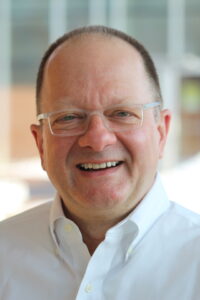
Mark Pukita is an Ohio businessman, entrepreneur, civic activist, and founder of Ohio Common Ground, a statewide organization working to give Ohio voters a stronger, more organized voice in their government.
In 2022, Mark was a Republican candidate for the United States Senate from Ohio. That experience gave him an unusually close look at how our political system actually operates—from party organizations and endorsements to fundraising, political consultants, interest groups, and the enormous influence of a relatively small number of voters who participate in partisan primaries. He came away convinced that simply electing different politicians would not solve the underlying problem. The incentives themselves needed to change.
That experience ultimately led Mark to create Ohio Common Ground. Rather than forming another political party or asking Ohioans to agree on everything, OCG is working to identify issues where substantial agreement already exists, provide rigorous and transparent research, and organize voters so that candidates and elected officials have to compete for their support. Its guiding principle is simple: Politicians must earn your vote.