November 19, 2025
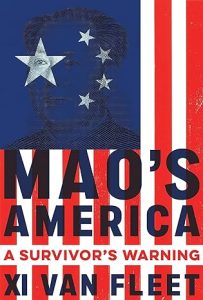
Mao’s America–A Survivor’s Warning

Class Description
Xi Van Fleet warns her fellow Americans of the parallels between the Progressive left’s Marxist ideology and the Cultural Revolution she lived through in China.
Xi Van Fleet is the author of Mao’s America: A Survivor’s Warning. In her book Xi recounts living through Mao’s Cultural Revolution and then moving to America, only to see the emergence of a Marxist ideology that echoes the one from which she fled.
Xi sees the following parallels between the Marxist ideology being pushed by the progressive left and China’s Cultural Revolution:
use Marxist tactics of division, indoctrination, deception, coercion, cancelation, subversion and violence
aim to destroy the foundation of the traditional culture to replace it with Marxist ideologies
weaponize youth, using them as their means to an end
share the same goal of achieving absolute power at the expense of the people
lead to the same ending: loss of freedom and totalitarian rule
We’ll discuss Xi’s experience under Mao and the similarities she sees in America today, and then we’ll take audience questions.
Speaker Bio
Xi Van Fleet is the author of Mao’s America: A Survivor’s Warning. She was born in China, lived through the Cultural Revolution, and was sent to work in the countryside at age 16 for re-education. After Mao’s death she was able to go to college and eventually come to America for graduate study. She has lived in the United States since 1986. In 2021, she delivered a speech to the Loudoun County, Virginia, school board against Critical Race Theory. The speech went viral and ignited national conservative media attention. Since going public with her message, Xi has appeared on Fox News, TuckerCarlson.com, Newsmax and radio shows and podcasts across the country.
Mao’s America: A Survivor’s Guide | Xi Van Fleet
[00:00:00]
Host: Hi, I’m Mike Merc. I’d like to welcome you to Empower You. Tonight’s guest is Van Fleet. Um, you might have heard about GA number of years ago. She, um, spoke up at a Loudoun, um, county Virginia School board meeting about, um, how, uh, wokeness was becoming, uh, and America was starting to resemble what she experienced under Mao in China before she came to America.
And that she ended up becoming a big celebrity in conservative circles and became a book author. So, we’ll be speaking with Xi tonight. Um, I, I want to mention I’ll also be joined by, uh, empower You board member Barb Horowitz. Barb was actually the person who thought of inviting G and who reached out to her and invited her, invited her, and, um, Barb had a lot, uh, uh, a sort of, um, uh.
She has deep interest in [00:01:00] G’S background and she had come up with a lot of questions from a different perspective than I’d come up with. And, and we talked and we decided it’d be really, uh, better for the audience if both of us spoke to G. So we’ll do things a little differently tonight. We’ll have a three-way conversation, which I think will be, um, you know, a richer experience for the audience.
Now, I would like to, um, welcome Barb if you want to come on before we introduce Xi. So a again, Barb Horowitz. Barb is Barb’s an attorney, but she’s a long time Empower you board member. And, um, I’m, I’m really, Barb, I really wanna thank you for joining us. I know you didn’t plan on this, right? It’s just been a couple of days since I asked you, but I, I really do appreciate it and I, I think everyone’s gonna appreciate your, you joining us to, to make it a, uh, no, a richer conversation.
Barb Horwitz: I’m here, I’m enjoying it
so
far. Okay? I had to be here with everyone.
Host: Okay. Alright. Now I would like to, uh, introduce Xi formally. Um, so [00:02:00] as I mentioned, Xi first came to, uh, you know, sort of national Renno when she spoke out at the Loudoun County Virginia School Board meeting. And she was just acting as a citizen, feeling like she’s doing a duty and she recognized that wokeness in America and, and, um, uh, critical race theory were really sounded like communism in China.
So she spoke out, I can’t, she spoke out for a minute at that board, board meeting and it went viral. And she, since then, she’s been on every, you know, Fox News, a Hannity and Tucker Carlson. And, um, she’s authored a, a book which we’ll discuss, uh, ma America a Survivor’s warning. And she has a second book coming out.
Um, but, but gee, um, you were, you were born in China and you actually, what you were 16. When the, uh, when you were, the, the cultural re revolution emerged and you were sent to a, a reeducation camp? [00:03:00]
Xi Van Fleet: Uh, no. The, the cultural
Barb Horwitz: revolution
Xi Van Fleet: started when I was seven.
Host: Seven, okay.
Xi Van Fleet: Yeah. And when I graduated, uh, from high school, um, at the age of, uh, 16, I was sent to the countryside to get my reeducation.
Host: Wow.
Xi Van Fleet: And I, yeah, I, uh, I labored in the field for three years.
Host: Wow. Wow. So, so we, we want to welcome you and, and thank you for joining us so well, thank you so much
Xi Van Fleet: for having me.
Host: I, I thought I’d start off because I, I’ve, I watched a lot of interviews with you to prepare for this and, and, and I’ve read articles and people always reference your speech at that.
It’s only a minute long, right. At the Loudoun County, Virginia. Yes. But, but I had actually, it had been four years since I had heard it, and I’m sure there are the people in the audience who haven’t heard it or who forget about it. So if you don’t mind, I’d like to just play it. It’s only a minute and I’ll, um,
Xi Van Fleet: less than a minute.
I ha I spent a few, we were only giving one minute and there were cut you off if you go, uh, uh, beyond. And I saved a few [00:04:00] seconds. I think it’s not quite
Host: the least. Okay. Alright. Well let me, um, see if I can do this here. I, I downloaded it so I could boost the volume.
Xi Van Fleet: I’ve, I’ve been very alarmed while what’s going on in our school.
You are now teaching training our children to be social justice warrior and to lose our country and our history. Uh, growing up in most China, all this same very familiar, the, uh, communist regime used the same critical theories to divide people. The only difference is they use class instead of race during the cultural revolution and witness students and teachers against turn against each other.
We change school names to be politically correct. We were taught to denounce our heritage. The red guards destroy anything that is not communist oath, statues, books, and anything else. We are also encouraged to report on each other, just like the, uh, student Equity Ambassador program and the Bias Reporting System.
This is indeed the American version of the Chinese Communist. The Chinese cultural revolution, [00:05:00] the critical race theory had its roots in cultural Marxism. It should have no place in our schools.
Host: Wow. So that you mentioned, um, before we came on, you said that, that that sort of went viral and it drew you into this public sphere that you had no intention or never imagined you’d, you’d be drawn into.
Could you, could you just tell us before we get into your, you know, your experience in China, could you just tell us a little bit about what that experience was like? What happened after you gave that speech? Yeah.
Xi Van Fleet: And I was never involved politically. And which is something I want to talk a little more later because I thought I come to this free country and freedom is a given.
I paid no attention to po uh, politics until really seriously, 2020. And I just saw this is cultural revolution. This is exactly what I experienced as a child. Um, so I decided to get, uh, involved and, uh, just because I got involved, I was, uh, um, you know, [00:06:00] receiving, uh, emails and, uh, and one of them is uh, uh, urge the members of, uh, the, uh, um, Northern County Republican Committee to go to school board.
And so I, I volunteered to go to the school board and that’s what happened. And I thought just a local thing and I did my duty and, uh, I did not expect anything. And, uh, when the following day when the Fox News called and other people called, I was like. What I said is something everyone knew. Of course, everyone knew this is the Chinese, um, the repeat of Chinese cultural revolution.
But soon I found out people did not know. People still don’t know. And uh, um, and then I, I realized this is my duty to really educate Americans, to wake them up. And what’s going on here is something I experienced 50 years ago. It is Marxist [00:07:00] cultural revolution. And since then I haven’t stopped. And so, so this is my, um, something that really, really shocked me, that Americans have no idea, no idea of, uh, communism in general, uh, very little idea of Chinese communism.
And they have no idea at all that there is a cultural revolution just like this. In China.
Host: I, I, I have a question about that because I, I understand, I mean, you’re right. A lot of people, a lot of conservatives see, you know, that, that this is, there’s risk, right? Mm-hmm. There’s risk. Like we, these are communist ideas and, and we’re moving in that direction.
But, but I was thinking about this to prepare for this. The, we, we don’t see, um, uh, state initiated violence against the public. And I’m wondering, what do you, what’s your reaction to that? So, so I was thinking like, well, should we really be nervous about this? It doesn’t, it hasn’t got to the point where there’s [00:08:00] state initiated violence against the public to repress us, right?
Mm-hmm.
Barb Horwitz: But that goes right along with, um,
Barb Horwitz: your
Barb Horwitz: background, what you experienced with the red Guard. Mm-hmm. And you, yeah. If you explain to us a little bit about your background, uh, with the, um, no, I forget. The struggle sessions.
Xi Van Fleet: Yes, yes. Yeah.
Barb Horwitz: And, and you know, if you go into that a bit, I think that you’ll see the connection there.
Xi Van Fleet: Mm-hmm. Yes, absolutely. So, like, uh, uh, Michael said, you know, when you think about communism, you think about, uh, the violence, uh, by the state against its people. That is, uh, what people usually, uh, understand of communism, but not, not cultural revolution. That is, uh, Marxist cultural revolution. So Mao did not use his, uh, military and, okay.
So quickly I want [00:09:00] to, um, explain why there is such a cultural revolution. It is because Mao failed, that he was loose in power, he was losing in control of the country and his own party. So he launched this cultural revolution to get back his power. Absolute power. So he did not use military. He did not use, um, um, state violence.
He did not have to, but if he used it, it looked like he was, uh, um, uh, really, uh, using the, uh, state violence against his political enemies. He was very smart. He used something else. He used the kids. And so kids from, uh, um, in a, uh, from uh, uh, universities down to elementary schools and they’re called the red guards, he gave them power and told them to go after those capitalist rotors.
What does that mean? You know, [00:10:00] always capitalist rotors. He told this young people because those young people are indoctrinated just like the kids today. And so whatever he told them, they believed. So he said, we are in danger of losing our country. Because in every level of uh, um, our government, we have a lot of people, they’re not really communists, they’re capitalists.
They want to take us back to the dark, um, um, darkness of, uh, um, of capitalism so that we all will lose, our freedom will be exploited by a few. And so we need to take them down. So he gave the kids the power. So it’s not the state violence, but it was the violence of people against people. In this case, they are red guards, the kids against whoever in power.
[00:11:00] And so for the kids, when you think about people in power who they think first, they think about their teachers, they think about their professors and the principal, that’s where they started. But eventually. Everyone in power was, uh, the target. So, um, the cultural revolution started in May, 1966, hardly three months into the cultural revolution, um, and violence, uh, brought, um, um, erupted.
The, uh, um, the first to Go was a principal of an all girls school in, uh, middle school in Beijing. Here’s something to, to, uh, I think people should pay attention. The first death, the first violence in cultural revolution was committed by a group of girls. The [00:12:00] girls took out their principle and, uh, um, letter through a struggle session.
What is the struggle session? It’s a basically denunciation meeting. So she was put on stage and the kids were gathered and they denounce her and ask her to come, uh, to, uh, confess her sins, the sins that against Chairman Mao, uh, against the system and whatever, and beat her up and killed her. And that was, uh, in August, uh, 1966.
And so actually afterwards, the girls got a little scared because after all, they killed a person. So they reported to the, uh, uh, central Committee of Cultural Revolution and there’s no response. And they, basically, what that means is they were given license to kill. [00:13:00] So, uh, after that, in August of 1966 in Beijing.
1700 people were killed by the red guards. So this is something I try to tell American people try to understand it. You think this is something only happened in countries like China, but it happened here, it happened in 2020. You know, the, the, the American red Guards burned American cities and the dozens of people died.
And, uh, so don’t think it’s never happened here, but that in general is what happened in the cultural revolution. So in the, um, in the following three years. Um, but, um, the more people are killed. And there was no one principle in China that did not, or dragged through the, uh, struggles, uh, session. Many of them were killed, uh, by the end of the cultural revolution when Mao died [00:14:00] 10 years later in 1976.
Up to 20 million people lost their lives. And that’s, that’s what a, um, a culture volution, um, really, uh, looked like. In the mean, uh, mean, meanwhile, what they did is not just kill people. They destroy the Chinese culture. The Chinese civilization. They destroyed statues, temples, and burn books. And, uh, they also changed names.
That’s something that, uh, um, for unfortunately become familiar to so many Americans in Virginia, they changed the, uh, uh, Lee Highway into whatever, I can’t even remember because Lee is a, a Confederate general. They, uh, changed school, school names. I’m sorry. Have a, a little code. [00:15:00] Um, yeah, they erased, uh, Jefferson.
Uh, because everything is a racist. So, so everything I saw there in China is happening here and that’s why I decided I have to, uh, spoke up and to speak up. I have to let Americans know this is not just something that American, this, this is something happened before.
Host: When I’m curious, was your speech at the school board, was it after that summer of 22 after you witnessed Yes.
2021?
Xi Van Fleet: Yeah.
Host: Oh, okay. Wow. It’s
Xi Van Fleet: June, 2021. Yes.
Host: So I’m just curious, so was that summer really concerning to you? Was that like a, a big awakening for you that there really was this risk.
Xi Van Fleet: Yes, actually, I, I did start to notice things here and there, um, uh, as early as 1990s because, uh, I, I, at first I thought the political correctness at, at first I thought, yeah, um, it’s okay that [00:16:00] we, we, uh, choose kinder words for, for example, for people with disability and to course certain things.
I thought, yeah, it’s, it’s, it’s nice. And then I noticed they keep changing and, and they, they, uh, they, they keep, um, just one second. Um, they demand. They demand that, uh, um, that, that we, uh, uh, uh, comply, right? They, the words, the correct words keep changing. And I just realized this kind of, uh, remind me of the cultural revolution.
Um, because in cultural revolution there, you, we were required to use certain words, not others. If you use the wrong word, you will be denounced, possibly arrested, possibly killed. And so, um, and it is just so much that going on here. Just remind me of, [00:17:00] uh, the Chinese cultural revolution.
Barb Horwitz: Can you tell us a little more about, uh, your yourself, what you experienced growing up?
I know again, you were a young child, uh, about six when the cultural revolution started. Yes. And it affected all your school years. And can you tell us a little bit about that and your family?
Xi Van Fleet: Um, I, um, okay. I have to say that, uh, no one, no one, um, uh, escaped, uh, cultural abortion. Every family suffered, and I have to say, my family, at least, um, in my immediate family, no one died.
There are others, um, uh, is, the suffering was tremendous. Um, but for me, uh, it’s still, uh, it’s a unforgettable experience. So I was, uh, I just finished my first semester, uh, [00:18:00] when cultural, uh, of my first grade and the cultural routine started and the class stopped. Um, and, and because, uh, the, the, the kids were after teachers and the principals, so there was no one running the school.
And so one day when I went to the classroom, and so I saw the sign on the blackboard by our teacher, said, there’s no classes in the next, uh, in three days. And that three days turned into, uh, two years. So no school for two years. And so we were just, uh. Uh, yeah, we were just out, um, every day the kids were out to, to basically to see what’s happening on the street and what’s happening on the street was really the red guards doing all this.
At, at, at first it was just destroyed, um, uh, statues, um, and, uh, graffiti and with, uh, revolutionary slogans [00:19:00] and loud speakers in the, uh, um, in, in the called propaganda vehicles, uh, going around the city and, but quickly turned into violence so quickly we could not go to the street. It’s no longer safe, people getting killed.
And, uh, so eventually we, we, we stayed home and unsupervised. Why? Because our parents were doing the same thing in the workplace. They have to do the same thing. They have to go and get the capitalist rotors, the people in power, and then they denounce them. And uh, and then everyone has to examine themselves to make sure that they are, um, in, uh, up to date with their correct thinking and all, all, all the things.
So for two years, there’s no school. By the time finally school started, um, I was in fourth grade and everyone just think it’s normal. Fourth grade, we just missed two years, no problem. And so [00:20:00] all the textbooks that I used, uh, um, the old textbooks, which were already made by the communists were no longer good enough.
So all bad, all the textbooks were bad. And uh, um, so we only have one textbook, and that was mostly the red book. So we use that as our textbook for an entire year. We read from, it’s just a Red little book. It’s basically mouse quotation book. So we read from beginning to the end and back and forth, and I remember every line of the little, uh, quotation book.
Um, are you familiar with this guy? He’s an influencer. He, uh, he’s called Hassan Piker. I just learned about him. He was a, an, do you know, uh, Michael? Have you heard about it?
Host: No. No, I haven’t.
Xi Van Fleet: Okay. Anyway, he’s an influencer with millions of [00:21:00] followers and, uh, um, and he just went to China and then he was, uh, giving, uh, um, like a red carpet treatment by the CCP.
He was the p the uh, CCP. And then he was giving a gift. Guess what? That was most Red Little book. And he said, this is so special. I got a, mostly the red book. He had no idea. He had no idea. But for us, that was our textbook for an entire year. And eventually, uh, time fly by, by the time I graduated from high school at the age of 16, the entire country was in rooms.
And, uh, um, there’s no jobs for, uh, urban youth. And, uh, so what, what did ma do? Ma send all of us to the countryside and to work in the fields and with the passage, [00:22:00] and he call it reeducation. So, um, he, he, he said, this is the best place for the young people to go. So you can, um, you can, uh, really get reeducated by the peasants to be true communists.
And I stayed there for three years after his death.
Host: Um, can, can you hear me? Mm-hmm. Yeah. Okay. I was, I was wondering if the red guard, was it a formalized thing where you’re either a, were you a member of the Red Guard or did it just refer to any kid who took action at some point?
Xi Van Fleet: It, it, it is, uh, complicated, but it started with a group of, uh, um, um, group of kids.
They were all children of the, um, party Elite. And so they organized it. They called themselves, they got the name Red Guard and Mao endorsed them and, uh, uh, and [00:23:00] so they started to kill people, like they, they think is the enemy of Mao. So, but eventually they figured out that, uh, their parents were the real enemy of Mao.
Do, do, does that make sense? Yeah. They their own
Host: parents.
Xi Van Fleet: Yeah, their own parents. Right. By then, more youth join. At first it’s kind of elite, a group of elite, um, kids. Uh, and then all the other kids join and those kids hate the parents of the, uh, political in, uh, party elites. And so they went after the party elites.
So many of them, so many of them were killed. Wow. And the, uh, number one victim of the cultural revolution is the [00:24:00] number two CCP, uh, figure number two. He was the president of China and he was mouse arch enemy. The red guards went up to him. And, uh, he have to go through. There is still videos, uh, and you can, you can watch him.
The, uh, the red guard, um, uh, dragged him through a struggle session and that he was eventually, uh, imprisoned and then died. Um, because he was denied any political, uh, any medical treatment, and he had some, uh, health issues. That’s what happened. So, by the kids. By the kids.
Host: So it sounds like the, the kids must have experienced, you know, ego inflation or, you know, IE they were drunk on power, right?
It just, yeah.
Xi Van Fleet: To be so
Host: young.
Xi Van Fleet: Well, think about those, uh, Antifa. Okay.
Host: Right.
Xi Van Fleet: Same thing. So I said, red [00:25:00] guard in China. Now, you know, you, you, you, you, you have a hard time understanding it. Just think about Antifa. Think about the bms. And, uh, so they’re drunk in power because the Democratic party is behind them.
Look at the 2020. They, and, and, and look at Kamala. He, she went there and, and, and, uh, bail them out. If they are arrested at all, they know they can do whatever because they have Democratic party behind them. Just the same thing as, uh, the red guards. They knew they can do whatever because Maui is behind them.
Behind them. The, I hope that makes sense. Yeah. And yeah, so they, the Democratic party and the, and the Mao were using kids for their own, uh, political, uh, end. And those kids were called What for idiots. [00:26:00] Of course they did not know they were drunk with power. They were giving all this power to do whatever, even to kill.
And here’s something, I think the, uh, modern Antifa or the so, so-called, um, now the, the, those mops against the ice because they knew that there’s someone behind them. Okay. Anyway, so after Mao, uh, after the red guard, um, did exactly what Mao want them to do, took down the people in, in, in position of power and Mao, um, they thought they will share power.
They thought that Mao will give them a seat at the table and then they start to fight each other for power. The red guards. And it become almost like a civil war. And at first they were just using, you know, sticks, rocks, but eventually they raided the, uh, the military and they got real weapon. And started to kill each other.
And so Mao said [00:27:00] that’s it. They are no longer useful. There’s idiots. So Mao used the military and suppressed some of the violent factions and sent all of them to where? To the countryside to get reeducation. That’s what the red guards got in the end. They were discarded when they are no longer useful.
And I just really, really want the people here, the young people here to understand it, this Antifa members, when you are no longer useful, the things will happen to them as well.
Barb Horwitz: Um, what happened to them once they did the reeducation? What became of them eventually?
Xi Van Fleet: Um, that is called the Lost Generation. By the time the cultural revolution was over and, um, they missed so much. Many of them missed the opportunity to go to college, [00:28:00] and, uh, they also missed, uh, their education. And so, yeah, it’s called, um, uh, the Lost Generation.
And today in some of the big hospitals, um, and the psychiatric hospitals, um, they have special wards for the former red guards. It’s called the Red Guards Wards. There’s so many people just, you know, damaged forever. Damaged. Yeah. So that’s the,
Host: I’m wonder, I’m wondering about the, so for someone like you, you were sent to an, how old were you when you went to an reeducation?
Okay.
Xi Van Fleet: I was not a red guard because I was too young. Okay. I was only seven. Okay. So by the time I graduated, those red guards were already labored in the fields for years. You see what, so I was fortunate. That, um, um, I was 16 when Mal died, [00:29:00] and, uh, soon after that, um, and his successor decided he has to do something, otherwise the whole country will collapse.
He opened up universities. So at the age of 19, I was able to go to college. And, uh,
Host: I was wondering about the, if, if you could just describe the, um, the psychological climate for someone like you. So you’re not, you weren’t drawn into these activities or the, you know, the red guard activities, but what was the psychological climate for you?
Was there a, a daily terror or fear, or did it become a normalized state of things? What, what was your emotional and psychological state, all those, those years?
Xi Van Fleet: Yeah, it’s kind of hard to, um, to describe, I would say, um, when you live in a totalitarian country. And, uh, I, especially for me, um, I never really had [00:30:00] real conversation with my parents, um, about, uh, uh, what’s going on around us because, uh, um, I, I, now thinking back, I know that, uh, every parent was, uh, um, uh, concerned about, uh, talking anything political with their kids.
If something went wrong, the kids can report, uh, the parents to the party. And that happened often that, uh, um, the, uh, the, the kids will report to the authority that the parents said something incorrect, politically incorrect at home. So the parents got into trouble. So I never get any guidance or anything from my parents and outside the family.
I only have one source of information that’s the party. So I never questioned anything, no matter how [00:31:00] crazy things were. I just accept it and that must be what the party wanted. And the party can never be wrong. So if Party wanted this, this must be okay. I think that is something that happened to a lot of people, especially, and for younger people.
You can’t think, you cannot think in a state like, uh, in, in, in an environment like that. And that was the intention, wasn’t it? Exactly. Absolutely. So that’s what I’m saying, that, uh, you cannot think. Critically, if you don’t have, uh, information, especially if you don’t have information that require you to make a judgment, you can, you hear one person say this way, another say that way, you have to say, Hmm, I think this way make more sense.
You don’t, you only have one source of, [00:32:00] uh, uh, voice and, uh, and that’s always the party. And the party tell you whatever you, you, you, I I think you just, you just accept it. I, I think that is what the, the, um, um, the, uh, communist, communist system depend on that people just don’t have information. As a result.
They can think,
Host: I was gonna say, gee, it, it must have been, um, to, to be in that state of mind, it must have been a. When you came to the, to America, a, a, a long-term untangling, right? Sort of Oh yes. Withdrawing from that state of mind and, and it, it transitioning to freedom, right? I mean, there must have been an incredible transformation that that took place.
And actually
Xi Van Fleet: it happened before I came here.
Host: Oh, yeah.
Xi Van Fleet: Um, so, um, [00:33:00] um, after Mao died, um, and his successor, NG Xing, um, decided to open up, to open up China a little bit to lose control because he knew if he did not do it, the whole thing, world collapsed. So little by little things start to open up, okay. For example, during the cultural revolution, if you were caught listening to what they called enemy stations, such as, uh, BBC or Voice of America.
Or, uh, free Asia radio, free Asia, things like that, or radio free Europe, you’re going to be arrested. Some people, uh, lost their lives, uh, for that offense. So I never even, I don’t own, I did not own a short radio, a short wave radio. So I, I, even if I want to listen to some, I, I did not even, uh, have a radio.
But there are some, um, some [00:34:00] braver, uh, individuals. They make their own radio and, and then they listen to, uh, those are the people that are brave. I did not even, uh, entertain that idea, and I believed party said, if you listen to enemy radio, you become an enemy. So I never even tried. But then, uh, when I went to college, things started to open up and, uh, by then.
It’s okay to listen to Voice of America because my major is English and we, uh, learn English from, uh, you know, when I was in college, it is Chinese teaching, Chinese chinglish, we call it chinglish. So we, we would listen to the, uh, um, voice of America or BBC. So through that process, I just realized everything I was told before was just lies.
So, but I still don’t understand what freedom is and, uh, um, really have no idea what freedom [00:35:00] was. And, um, so that was something I learned little by little after I came here. So why I learned it, because I desperately want to be American and I went through this process called a simul. I learned, I read about America history and I visit barely.
I like to travel. I visited any historical place I can find. And, uh, by doing so, I learned and appreciate the ING of America. And by little, by little I learned what freedom really means. And before I just, but now to assimilate is being racist, right? They don’t want that to simulate, they want co uh, multiculturalism.
And I, I remember in the, in the nine, uh, early nineties and, uh, [00:36:00] so I was thinking multiculturalism. I said, if I like my culture that much, why would me or would I bother to come to America? I, I had that little question there, but I did not really think that much about, I participated in companies Multicultural Day and I cooked my Chinese food and, uh, you know, and, uh, contributed.
Um, but now thinking back, yes, I assimilated, but so many people were stopped from being simulated. And not only that, they were told your culture, no matter where you are from, is just as good as American culture. They’re all equal. And that’s how they stop, uh, people, uh, from really wanting to be American.
That’s our problem today.
Barb Horwitz: But it took a lot of courage for you, even to take the steps to come here and to decide to leave your [00:37:00] culture. And leave your family?
Xi Van Fleet: Yeah. At, at that time I already know because growing up we were taught that, uh, America is a evil country and it’s a, it’s a country for the rich.
Just like the kids told today in America, America is only for the billing errors. It’s not for the, uh, average working class. They were oppressed. That’s exactly what we were taught. And, but uh, after I start to get my hands on, uh, materials or uh, listen to the radio and later we can watch some American movies, I said, that is bs.
I was told America is a great place. By then everyone wanted to come to America. Of course, only a few are lucky enough. And I was one of the few people that was lucky enough because, um, after college I was teaching in the, um, in the, um, teachers training college. And, uh, and then it, it was a [00:38:00] early eighties and there’s a lot of American, uh, coming to, uh, my school and, uh, and during summer to, uh, to teach.
And I made friends with, uh, a lady from Kentucky and we become friends and she told me she would, uh, uh, like to help me to come to America to study. And, uh, so I was so grateful. But, uh, after, you know, she left because they only isn’t there for the summer, I said, oh, I’m sure she will forget.
Host: But she didn’t.
She didn’t. We, we have, Barb, we have three questions from the audience. Do you mind if I go through those. Okay. Um, so we have three audience questions. The first one is sort of long. Um, so it says, um, have you considered that the cultural revolution was not Marxism, but actually the colonization by Great Britain?
See the analogies ma was a puppet. Like Joe Biden, [00:39:00] the red guard is Antifa Killing. The killing in your story by a girl was feminism critical. Race theory was divide by race, class, type, and class. Typical of colonization. Fentanyl epidemic was the opium wars, which here, reaction to that. Gee,
Xi Van Fleet: that is. A long, I can’t quite remember.
Okay. This
Host: is, she, she’s the, the person asked, have you considered that the cultural revolution was not Marxism, but actually it is
Xi Van Fleet: absolutely Marxism. Okay.
Host: Okay.
Xi Van Fleet: This is what I’m trying to, uh, I, I think I, I think I have,
Host: they’re saying it was, they’re saying it, but it was actually colonization by Great Britain.
That’s what they’re asking.
Xi Van Fleet: Bri. Great Britain. Colonization of China.
Host: Yeah.
Xi Van Fleet: Uh, no, no, no, no. And it’s Marxism. Okay. So, um, Marxism, one of the key is, uh, the doctrine. By now every American is, uh, already familiar with that is called [00:40:00] oppressor and oppressed. Uh, dynamic. The doctrine is the world is made of oppressors and oppressed.
So what you do, if you are oppressed, you fight back. You fight back. That’s called class struggle. And so that was, I call it classic Marxism. So it’s all about arians against bourgeois, right? It’s the, uh, uh, the working class against the capitalists. And that, uh, happened in Russia and in China. And so in China, people are divided into two classes.
Uh, red meaning, uh, the working class, they’re oppressed. Another is called black class, and that’s basically the oppressor class. And then once they divided, everyone get a label. Everyone, everyone get a [00:41:00] label. You are either oppressor or you are oppressed. And when you are oppressor, you are the enemy of the state.
And so, and, and then, and then many of them get killed. Um, about 2 million land owners got killed. Just because their own land or just because they have more than their na uh, neighbors. So that’s actually worked pretty well in China and, uh, and, and, and so class, division is how they divide people, but not in America.
In America class is not really a thing. You can be poor today. Like many of the, you know, uh, uh, um, Carnegie Ford, they were not rich, born rich, but in America, you can become rich or you can rich be, be rich and bankrupt and become poor. So class is not really a thing and would not work if you [00:42:00] want to, uh, overthrow the system.
And that’s what, uh, later, um, we have this called, uh, um, cultural Marxism is they have better ways to divide people, and that’s by race. CRT, right? Critical race theory. And then by sex, that’s basically critical feminist theory. And then turned women against men. Men become oppressor. Women were oppressed in, uh, CRT.
Uh, black were the oppressed white with oppressor. And then black become more than black and brown. You heard black and brown people. And, and then yellow people like, like us, you know, like the Chinese. But now do you know what Chinese is called? We are called white adjacent because, because we’re too successful.
So we no longer qualified [00:43:00] as oppressed. So we become a half oppressor, and then that’s not enough. And then they go on with, uh, you know, um, sexuality and now transgender. And, uh, it’s the same idea, but one, uh, worked in China, that’s class. And here they have to be more creative, but class is not gone. And that’s why, uh, we still use class as a division.
And that’s the, uh, the, uh, a OC and Bernie Sander, uh, uh, faction. They want still, uh, focus on class that Bernie Sander is like one, uh, 5%, right? At first he said 5% against, uh, 95% when he become the 5%. Now he said it’s 1% against 99%. It’s still the same thing class, but whatever they do is to divide people. When you want to, uh, take down [00:44:00] a, um, um, um, a system, when you want to have a revolution, you got to have people divided, divided it into.
Allies. Um, so it’s the same thing. It’s Marxist.
Host: Wow. Um, so we have, uh, another question under Mao, were social classes reduced or eliminated?
Xi Van Fleet: That is a good question. That was, uh, um, the promise, socialism and communism Pro promised a classless society, and that’s why, um, the communism, uh, communists were successful in China because the promise of free thing, free land for everyone, for the peasants back then up to 90% of the population were peasants.
He said, we are going to give every person land, so become all equal. And [00:45:00] then there’s no class. Is that true? Of course not. We all become equally poor, except. Their new ruling class, which were the party leads.
Host: Wow. So we, we have a comment. Someone says, um, they did not want you to ever think, they kept information from you at all costs.
So you would not think it reminds you of all the people in the US who rabidly censure information by labeling everything that challenges their agenda as disinformation and misinformation.
Xi Van Fleet: Actually, they did such a great job. The communists here in, in America, in China, the physically control the information.
You cannot, you, you, you have no access to radio, print and, uh, television. Right. But here they, they, they, uh, brainwashed the, uh, people so well that [00:46:00] they did not even want to know. They, they, they, uh, they brainwashed the indoctrinated people. They don’t. Want to know the truth, they don’t want to know the other side of the story.
So in many ways, the, uh, uh, cultural Marxists here are much, much more sophisticated than the Chinese communists.
Host: And then we have another comment. It was the person who asked that first long question. Um, he or she is saying, by the way, I’m a native Chinese born in China. I wrote that long comment about Great Britain.
You know, the, that phrase that once applied, the sun never sat on Great Britain. I heard a good retort because God did not trust them in the dark. I was, was I, I dunno
Xi Van Fleet: what that means. Well, what does that mean?
Host: Um, okay. Well, I think, I think what she was saying was, I, I think she wasn’t saying it wasn’t communism, but I think she was, he or she was [00:47:00] asking if Great Britain might’ve been behind what the, the communism that was implemented in China.
Were, were they pulling the strings and, and driving? It? Was Mao, in other words, like a puppet of China, I guess of, of Great Britain. Of Great Britain?
Xi Van Fleet: Uh, I don’t think so. I don’t think so. Why? Because Marxism is a western ideology. Okay. It’s not a British ideology. It is a Western ideology. And so, um, many, many, uh, um, westerners, uh, believe in that, uh, ideology.
But the revolutionary, uh, the revolution was never realized or, um, um, in, in the western countries. So the first one that was successfully carried out was in Russia. It’s not even a capitalist society. So, and then it was the Soviet Union. It was the Russians that helped to, uh, create the [00:48:00] CCP. So the CCPs first bankers, um, the, the people that back, uh, the CCPs, Russian, Russian us, uh, the, uh, Soviet Union.
So I, I don’t know how this, I don’t know how the idea came from it’s back, uh, Britain, I, I don’t know.
Host: Yeah. Um, Barb, I wanted to see if you, if you had any more questions. I, I had some, some questions about some sort of tangential issue. Is there anything Well,
Barb Horwitz: and yeah, I have, uh, something sort of tangential, uh,
Host: go ahead.
Right.
Barb Horwitz: But, um, I don’t know if we have time to get into it. It’s taking a, yeah,
Host: we still have 20 minutes.
Barb Horwitz: Oh, okay. Okay. In your book, she, um, you talked about your foundation and she said to tear down a society you have to destroy its building blocks.
Barb Horwitz: You identified [00:49:00] those as traditions, family, religion, and morality.
Xi Van Fleet: Mm-hmm.
Barb Horwitz: Can you talk to us a bit about that?
Xi Van Fleet: Those, yes. Um, so, so communism. What, what communists, what they wanna do, they want to transform a society, and they not only want to transform the society, they want to re-engineering human nature. And all this is happening right here in America. But the building block of a society, of course, first is family.
And so, and especially in China, the, uh, long tradition of Confucian, uh, Confucianism always put family first. So because of that, the, uh, the, um, the Chinese Communist Party make sure that they have to de, uh, uh, [00:50:00] destroy family. They did not physically destroy the family, but they demand. That the loyalty of the family is not to thelan, not to the members of your family, but to the party.
And, uh, so we were told growing up that our real parents were the party and we sing the songs. And the songs are still being said in China that you, you, you are, your father is dear, your mother is dear, but no one is as dear as Chairman Mao. And no one is as dear as the party. So the loyalty is always to the party if you have to choose between, um, party.
And, uh, your parents, you don’t even think twice. You choose the party. So in that way, they [00:51:00] destroy the family because the family is, no, the family become like a, like I said earlier, my parents or any parents are really, really scared of their children. They have to be so careful talking even to each other.
If the kids overheard things, they might report to the party. And, uh, so, and then the other is of course, religion.
Because religion in every civilization is the foundation for morality. Morality is not just come from something, it’s always based on religion of that particular civilization. In China, it’s, you know, it’s Confucianism, but back by then there’s a, um, since, uh. Middle of 1800, a lot of missionaries went to China and they really built, um, um, the [00:52:00] churches in many parts of China.
So Christianity was a force there. And so the, uh, um, communist Party made sure that all of them were destroyed and so churches were closed. Those who were not closed were under control of the party. And so, um, again, you can, you can still, in big cities, you can still see some churches, but what’s inside has been hollowed out and it’s controlled by the party.
So then what is morality? How do you know right from wrong? Well, the party tells you. The party tells you, um, this is right, that is wrong. And, uh, the party tells you.
It’s okay to kill because those people are bad people. So that’s how they destroy the uh, um, uh, society. Even today in China, [00:53:00] there’s no morality because there’s no religion that tells people what’s right, what’s wrong. And just a few days ago I saw this, uh, um, video and if you watch, uh, if you, um, uh, x you are gonna see a lot of this.
There is, uh, a motor, uh, um, motorist, um, had an accident, fell on the ground in the middle of a busy street. No one helped that guy. And even the buses and then the other cars and the, and the, um, they just drove around it. No one on the helped this poor guy. That only happened in China.
Host: Gee, I, I was wondering, um, I, I, I’m really interested in the, that the psychological, again, going back to the psychological transition, so when you came to the US [00:54:00] I’m wondering about the idea of free speech.
Did, did it take you a while to really accept that you could say whatever you wanted here? Or was there, I mean, was it like a three year process to, to, to really start to feel like you could really freely express yourself? Did you hesitate at all, or did you instantly feel like, I’m in my element here now because I can say what I want?
Xi Van Fleet: I, I, I did feel that way because in China we were taught you think not once, not twice. Three times or more before you open your mouth. And then the proverb says, um, the, uh, uh, the mouse, the disaster came out of your mouth. So your mouth is something you watch. So you’re self-centered as sensor, right? You just don’t say things that might get you into trouble.
So what people do, they lie, they lie to each other because they don’t want to get into trouble. But that’s more than that. So when I came [00:55:00] here, I said, well, now I don’t have to watch once, twice, and three times. But that’s more, uh, and because you order to say something, you have to think critically. And it took me a long time to learn to think critically.
So free speech is only one thing. Free thinking is the most important thing you can speak. If you don’t think critically, your speed does not really matter that much. I, I believe so. To think critically, that takes a lot of, uh, to me, a lot of detox, detoxification of what they put in my mind. There’s a lot of things that put my, my mind, and I did not even know until I came here, until my assumption was challenged.
And because I remember having this conversation with my husband, um, way back 30 some years ago, and I just said something. Of course, [00:56:00] of course, the, uh, rich people, they, they can only get rich because they’re exploiting the, uh, the poor. He challenged me that I got really mad. I thought that was truth. That was, of course, no matter anywhere, the rich people can only get rich by one thing, by oppressed others or exploit, uh, protein others.
So when he told me that, and I, I tried to have a debate, but I could not win that debate. And then I started to think and to, to, to, to, to get into this issue, I realized I was wrong. I was wrong. You don’t have to, um, you don’t, you don’t have to explore others in order to get rich, not in America. So there’s a lot of things you have to, and, and free speech, or all, I’m trying to say free speech.
Start with free thinking. If you can’t think critically, your free speech [00:57:00] is just, is not really, uh, free speech. Do you see what I mean?
Host: Oh yeah. Yeah. That’s, that’s fascinating.
Barb Horwitz: Going a, going along with that a little bit. Um, in your book, she, again, you talk about one of the greatest attributes of Americas is our deep belief in individual liberty and natural rights, and absolutely.
Do you see those being specifically threatened at this time, or do you think that our deep belief in them will eventually lift us past what occurred in China for a different
Xi Van Fleet: result?
Barb Horwitz: Uh,
Xi Van Fleet: well this is, um, um, this is something, it took me a long time to really understand, to understand the difference [00:58:00] between, uh, communism and freedom.
Okay, communism. I grew up, I never even, um, uh, questioned it. My rights were granted by the party. So the party tell me I can do this, but I can’t do that. I just accept it. And after come here, it took me years and years before I really understand what it means that, uh, our rights are from our creator so that the government can’t, um, the government job is actually to make sure that our rights are protected.
That is really something I, I have to say that I did not grasp it until much, much later. So because of that, and we are free people because of that, really, um, because our freedom is not from the government. Our freedom [00:59:00] is from, from God. But that’s something that people are no longer taught. And, um, do you know that, uh, just the, uh, um, I, I think about a few months ago, uh, a few months ago, um, the senator of my state, uh, uh, team 10, he said those, uh, um, those, uh, uh, MAGA or, or, or, or those conservatives, they’re absolutely radical.
They think their rights are from the God and it’s not from the Congress or from the government. See, that is absolutely dangerous. And so, and there are a lot of, a lot of young people never understood what it means that our God, our rights are from God, um, because they thought it’s also from the government and that, yeah, just like China.[01:00:00]
Host: I, I had a question. Um, you, um, a few weeks ago, you, you attended, uh, it was a premier or an event around Matt? Yeah. Yes.
Host: Matt Meyer’s documentary. Mm-hmm. Could you just tell us just a little bit about what the event was and what the, the documentary is about? I,
Xi Van Fleet: I, I have to say I did not get a chance to, to show my appreciation that you, you changed the date and it, it, it is kind of important.
Okay. So, um, Matt Lomeyer, um, was a commander in the, uh, um, space, uh, force. Um, and so he questioned the DEI, uh, practice in the military and he also wrote a book and, uh, it’s entitled Irresistible Revolution Expose. What’s going on in the military is, is really cultural, Marx. I listened to [01:01:00] his interview before I got even involved.
I think I listened to his interview early 2021. I was so impressed at the same time, I was so, so, so, um, disheartened that the infiltration of cultural Marxism has got into our military and you know, that the military should be the last place this kind of thing happened. So, um, uh, soon after, uh, I got a, uh, opportunity to, to meet, I met in the event and we become friends.
And so, um, later, and uh, when they were making this documentary, he invited me to be part of it. So I was, he, he said, because he wrote about the cultural Marxism, he want me to be in the documentary to almost like a validate his points because. DI is the same [01:02:00] thing that I lived through during the cultural revolution.
So for that I was very grateful, but this is something I really have to make a point of. Um, I, I think he’s clear-eyed about the threat that the America is facing, the military is facing, but now more than that, he has the courage to call it out. And the courage, um, is that he knew he’s risking a lot of things.
He’s risking his career. He’s risking, loosen the thing he loved most, being a pilot and he’s risking, loosen his pension. But yet he made the decision. He challenged and reported his, uh, direct commander about the DEI, uh, practice in the military. And, uh, for that. He was fired. And, um, [01:03:00] so fortunately now, uh, Trump, uh, nominated him to be the undersecretary of, uh, um, the, uh, uh, air Force.
So he, uh, he’s now back. Um, but, but as a civilian, and this is something I think, um, is a problem in America, and we heard this, um, a lot, the silent majority. Why, why we have this silent majority, and that is a problem, is because people are scared. People are scared to speak up. I witnessed in my workplace, and actually I spoke up.
Then, and then and, and I was retaliated and uh, um, that’s part of the reason I decide to quit my [01:04:00] job and devote the time to write my book. But I witness people, they are not to speak up. And I really want to warn Americans, if you feel now that you, you, you don’t want to speak up because you might lose some friends, you might lose your, uh, promotion.
You might lose your job. Wait until the communist took over this country. By then you were, might lose your freedom and you might lose your lives. So many people lost their lives to speak up in the communist country. And so that’s what I’m saying. We need courage. It is the coward, um, um, the cowardice that brought up where we are.
We need to courage to get out of this. And so I just think that, uh, if we continue [01:05:00] to have this silent majority, we are giving up our freedom. We cannot be, uh, free if we’re not brave. So that’s why I, uh, really highly con uh, recommend that documentary. It’s called Call Sign Courage, and it’s by about, um, um, you can find it in, uh, um, the website, um, call sign courage.com.
And we need more people like Matt. We need more people. Speak up. And here if you dare not to speak up, you are basically giving up voluntarily, giving up your freedom.
Host: We have three minutes left. Barb, did you have any, a final question you wanna ask?
Xi Van Fleet: Um, yeah. Uh, I’m not well. No, you go. You go ahead. Yeah.
Well, I just, gee, I, I, I wanted [01:06:00] to ask you, um, I know you have another book coming out, right? So we can see the book behind you, ma America, your first book. Yeah. Thank you.
Host: So, but do you, have, you have another book coming out in January, is it? Yes. Could you tell us about that book? We have two more minutes.
Yeah,
Xi Van Fleet: yeah, yeah. And, and the title of the book is, uh, made in America, um, the Hidden, uh, the, uh, uh, the Hidden History of how the US enabled the Communist, uh, Chinese Communist Party and made it our, the, uh, great threat. So in this book, I want to, uh, tell the story that how the United States. Played an important role of enabling, um, the, uh, uh, communist party, Chinese Communist Party from its, uh, creation back in 1921 all the way to today.
And America played a role and this role, [01:07:00] um, because the role America played. Now we have the most powerful threat this country have ever faced. More powerful than Nazi Germany. More powerful than Soviet Union. It’s because Americans back, you know, almost, uh, back a hundred years ago, never really understood what communism is about.
And knowingly or unknowingly, we created our worst enemy.
Host: Sounds like a good book. Where can we,
Xi Van Fleet: yeah, where can we purchase that book? You can see it in, uh, um, Amazon, and it’s, uh, now you can pre-order it. Oh. And you can bring me back and then we can talk about that important topic.
Host: Okay. Good. All right. Well, our time is up.
Um, I wanted to thank Barb. Thanks for joining us. [01:08:00] We, I really appreciate it. It really, I think, improved the, uh, whole experience. So enjoyed you asked some great questions. I enjoyed
Xi Van Fleet: it.
Host: Yeah. Well, thank you. And g tha thank you very much for, for, uh, joining us. We really, uh, I, I think it was fascinating and, um, you know, thank you.
Many people in our audience, I’m sure have never been able to, to hear what it’s like to live on under a. Communist, uh, country, and, and then to emerge from that. So that was, it was great. Thank you very much. Yeah. So
Barb Horwitz: wonderful
Xi Van Fleet: evening.
Xi Van Fleet: Thank you. Thank you. I, I have to say, I just came back from a trip and I have a cold, so I have to drink water and uh, and a cough.
Sorry.
Host: That’s okay.
Xi Van Fleet: You’re fine.
Host: Alright. Well thank you so much.
Xi Van Fleet: Thank you. Thank you so much. It was a wonderful discussion and I love questions. It’s always better to have questions in the monologue.
Host: Yeah. Good, good. All right. Well, thanks so much. Okay. And we’ll be in touch about the next book.
Xi Van Fleet: Yes, thank you.
Bye-bye.
Host: All right. Thanks.
Bye.